

Mark G. Hochberg
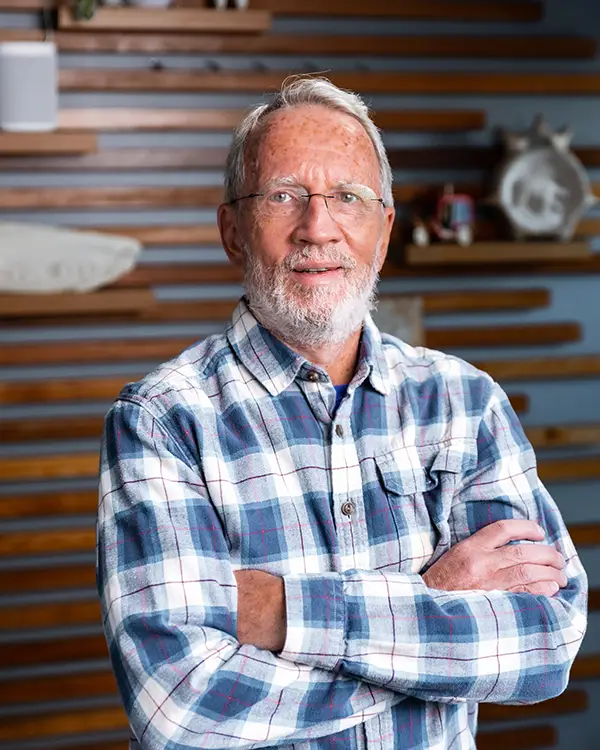
Dr. Mark Hochberg is originally from Pittsburgh, PA. He attended the University of Pittsburgh and graduated with a BS degree in 1985. That fall he entered the University of Pittsburgh School of Dental Medicine, graduating with honors (OKU) in June of 1989 with his DMD degree. Following graduation, he stayed in Pittsburgh for a one year dental residency before beginning his Oral & Maxillofacial Surgery residency in Wilmington, DE at the Medical Center of Delaware in July of 1990. He completed his surgical residency in June of 1994 and immediately entered into the private practice of Oral & Maxillofacial Surgery in the suburbs of Pittsburgh, PA. After being an associate for one year Dr. Hochberg and his family moved to Concord, NH where he worked as a private practice Oral & Maxillofacial Surgeon from 1995 to 2018.
Unfortunately, Dr. Hochberg could not continue working as an Oral & Maxillofacial Surgeon secondary to a physical disability, so he decided to return to school at Ohio State University in June of 2018. He completed his Oral & Maxillofacial Pathology residency in June of 2021 and his Masters of Science degree in June of 2022. He is now a Fellow of both the American Academy of Oral & Maxillofacial Pathology and the American Association of Oral & Maxillofacial Surgery, as well as a Diplomate (board certified) of the American Board of Oral & Maxillofacial Pathology and the American Board of Oral & Maxillofacial Surgery.
Today, Dr. Hochberg limits his practice to clinical Oral & Maxillofacial Pathology, no longer performing routine surgeries like dental extractions, insertion of dental implants, bone graft reconstruction of jaws or repair of jaw and/or facial bone fractures. The vast majority of his time is spent questioning and examining patients with known or suspected pathologic problems in their oral and peri-oral regions. Abnormalities are documented and stored in the patient’s electronic medical records as digital photographs. These are later used for comparative purposes as the patient’s conditions are periodically re-evaluated.
Many cases are managed medically with topical and systemic medications combined with intermittent patient re-evaluations. Some cases require soft tissue biopsies to establish a diagnosis for a patient. Dr. Hochberg’s extensive surgical knowledge from his previous career often allows for a biopsy (incisional-removing a part of or excisional-small enough to remove the entire lesion) to be performed at the same appointment as the examination and therefore, expedite establishing the patient’s diagnosis. Biopsies are typically five to seven minute procedures where more time is spent waiting for the local anesthesia (“Novocain”) to take effect than actually performing the biopsy procedure.
At the end of the day, a Pathologist’s job is to make a diagnosis for both the patient and his or her referring dentist. There are many diagnoses, but only one correct diagnosis! Most patients, when they end up having to see a Pathologist just want to make sure they don’t have cancer. For this reason, Dr. Hochberg has incorporated the use of a Carbon dioxide (CO2) laser into his practice. Often patients are referred for an abnormal appearing lesion on one of the mucosal surfaces in the oral cavity. A white (leukoplakia), red (erythroplakia) or mixed red-white (erythroleukoplakia) lesion on the normally “coral pink” mucosa can be representative of “Epithelial Dysplasia”. This is important because epithelial dysplasia is not a cancer, but is an “oral potentially malignant disorder” meaning, it has the potential to transform into a malignancy, or cancer. The aforementioned white, red and red-white lesions are typically evaluated by incisional biopsy to determine whether surface epithelial cells exhibit any dysplastic, or abnormal changes that predispose them to becoming a cancer. Epithelial dysplasia is graded as mild, moderate and severe, depending on the extent of involvement of the dysplastic cells. Patient’s with biopsy proven epithelial dysplasia are offered laser ablation or excision of their lesions, in an attempt to rid them of the potential of these lesions transforming into a cancer. The laser ablation procedure can be performed in the office with local anesthesia only takes several minutes to complete, depending on the size of the area of involvement.